· 3 min read
Borscht in Dubai: why a beetroot soup leads our menu
What borscht is, where it comes from, and how Sfumato in Business Bay serves the Ukrainian classic with garlic, sour cream and brioche.
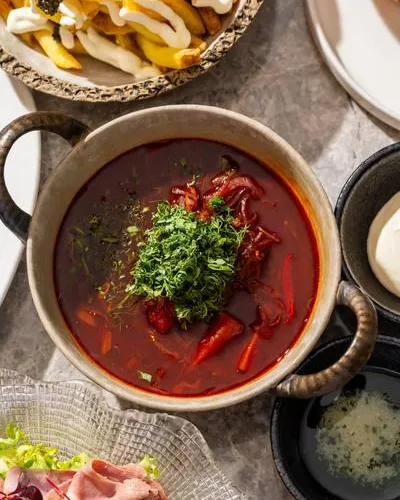
There is a moment that repeats itself at Sfumato almost every day. A guest reads the menu, sees borscht listed among the main courses, and looks up with a small smile — either because they grew up with it, or because they have always wondered what the fuss is about. Both kinds of guest tend to order it. That is exactly why it sits where it does.
What borscht actually is
Borscht is a sour soup built on beetroot, the vegetable that gives it its deep, almost jewel-like red. Around the beetroot you usually find cabbage, carrot, onion, potato and a long-cooked stock, finished with something sharp — vinegar, lemon or the natural sourness of fermented vegetables — and a spoon of sour cream on top. Ukraine considers it a national dish, and in 2022 UNESCO inscribed the culture of Ukrainian borscht cooking on its list of intangible heritage in need of urgent safeguarding.
Ask ten families and you will get ten recipes. Some cook it with beans, some with smoked meat, some keep it vegetarian for fasting days. Some insist on adding the beetroot at the very end so the colour stays bright; others stew everything together. The one thing nobody argues about is that it tastes better the next day.
How we cook it
Our borscht follows the logic of the whole menu: start with the ingredient and give it what it needs. The beetroot is cooked slowly so its sweetness comes through, the broth is made in our kitchen rather than bought in, and the soup is balanced so it is sour enough to wake you up without being harsh.
It comes to the table with garlic, sour cream and brioche. In Ukraine the classic companion is pampushky, small garlic buns; our brioche plays the same role — something soft and buttery to tear and dip. The menu description is three words long because, as we like to say, no explanation is required.
Why a soup belongs among the main courses
In Dubai borscht is often treated as a starter, a small bowl before the real meal. In the kitchens it comes from, it is the meal. A full bowl, bread and sour cream is lunch, and a good one. We serve it as a main course for that reason, and because it suits the way many of our guests eat at midday in Business Bay: something warm, honest and filling that does not slow down the afternoon.
What to order with it
- Vareniki with potato espuma and truffle oil, if you want to stay with Slavic comfort food.
- Beetroot stracciatella with blackcurrant sauce — the same vegetable in a completely different mood.
- A fennel and orange salad to bring freshness to the table.
- Honey cake or Kyiv cake to finish, both made in our pastry kitchen.
Borscht and the rest of the menu
Our head chef Jince Joseph cooks from Kerala roots and a long study of Slavic food, which is why borscht shares a page with kimchi seabass and house-made ramen. It is less of a contradiction than it sounds. Fermentation, slow broths and sour, bright flavours run through all three traditions, and through most of what we make in our open kitchen.
If you have never tried borscht, this is a good place to start: a bowl that respects the original and does not try to be clever. If you grew up with it, we would love to hear how it compares to your family’s. Either way, you will find it on the à la carte menu every day from noon at Opus Tower.